Era Pickleball Academy: Skills, Drills, and Strategy
The first time I stepped onto a court at Era Pickleball Academy, the air smelled faintly of fresh court wax and the familiar tang of a well-worn paddle. It wasn’t just a place to practice; it felt like a workshop where every movement could be improved, every habit tightened, and every mistake turned into a learning moment. This article isn’t a sales pitch dressed up as a seminar. It’s a grounded, experience-rich look at what makes Era Pickleball a meaningful place for players who want to grow, from beginners who are still counting their first dinks to competitive players who chase rankings and repeatable routines.
What makes Era Pickleball stand out is not a single trick or a flashy drill; it is a cohesive ecosystem. You’ll find a purpose-built pickleball center that respects the rhythm of practice and the honesty of competition. You’ll find instruction that blends biomechanics with strategy, not one at the expense of the other. And you’ll encounter a culture that emphasizes patience, progression, and accountability—qualities that keep players showing up long after the novelty wears off.
A practical vantage point is essential here. When I worked with clubs that wanted to translate raw talent into consistent wins, I learned to value the quiet, under-the-radar details: the feet that never quite align with the shoulders, the grip pressure that tightens during a patient rally, the subtle tilt of the paddle face that silently decides where the ball will land. Era Pickleball Academy translates those details into accessible, repeatable routines. The center isn’t merely a venue; it’s a living lab where you watch, measure, and adjust.
From the outside, pickleball can look simple. On the inside, it is a war of nerves and timing, a daily exercise in optimizing your court craft. At Era Pickleball, coaches bring real-world experience—long hours in the gym, countless hours on court, and enough travel to know what separates the casual participant from the higher level competitor. They know the differences between a cross-court dink that lands softly and a dink that lands with intent. They understand how a serve can set off a chain of decisions that either compress an opponent or free you from pressure.
If you’re reading this, you’re likely asking what makes the curriculum distinctive and how to approach a long-term learning arc. The truth is, you don’t get instant mastery in a single weekend. What you do get is a framework that supports steady improvement, a plan you can repeat, and a culture that holds you to your best standards. Era Pickleball Academy blends skill work with game sense, then tests that blend in actual matches where the pressure is real and the feedback is immediate.
The heartbeat of the place lies in its approach to fundamentals. A strong foundation isn’t glamorous, and it isn’t optional. It is the backbone of every successful rally, whether you’re chasing a P1 ranking or simply trying to enjoy a weekend with friends. The academy’s curriculum starts with footwork patterns that maximize balance and recovery, followed by stroke mechanics that emphasize control over power, location over velocity. Precision becomes the default setting, not the exception. When you’re able to place an easy ball consistently, the entire frame of the game shifts. Your opponent stops guessing, and you gain control of the tempo.
I’ve watched players who arrive with a sense of urgency about winning quickly. Their energy is contagious, but without discipline it can spin out of control. Era Pickleball’s coaching staff is adept at channeling that eagerness into structured practice. The best players learn to convert energy into deliberate progress. They practice short, sharp routines that build muscle memory and reduce decision fatigue during real matches. The result is not merely better technique; it is better decisions under pressure.
A practical vein runs through the academy’s philosophy: drill design that mirrors match rhythms. Drills aren’t gimmicks; they are carefully chosen tools that strengthen the muscle groups and cognitive patterns you rely on when the stakes rise. In my own work with players who wanted to move beyond inconsistent performance, I learned that the most valuable drills are those you can repeat, adjust, and scale. Era Pickleball embodies that principle with a catalog of progressions that can be tailored to different skill levels, from the early developing player to the seasoned amateur who wants to reclaim a more efficient conservation of energy.
An essential angle to understand is how the academy blends physical preparation with tactical intelligence. Good technique helps you outlast your opponent; good strategy helps you outthink them. At Era Pickleball, you don’t get one without the other. You’ll hear coaches talk about court geometry in practical terms—how to use the non-volley zone strategically, how to shift opponents from one side to another, how to structure a point so that your opponent must choose between a risky target and a safer option that you can anticipate. Much of what looks like artistry on a pickleball court is simply the result of predictable response patterns that players learn to disrupt.
Because this is a community-driven space, there’s a social component that matters as well. The best players tend to be those who treat practice as a form of dialogue—two minds on the same objective, one learning from the other, both moving toward clarity. The academy’s environment encourages this kind of dialogue. You’ll see players of varied backgrounds, all with different athletic histories, sharing notes respectfully after a tough drill, comparing paddle angles, and questioning what works best in a given situation. It isn’t about ego; it’s about shared elevation. In the days I’ve watched sessions unfold, I’ve seen new friendships form over a common love for a sport that rewards patience as much as it rewards speed.
For anyone considering Era Pickleball Academy as a turning point, here are the practical takeaways that tend to matter most in real life.
First, the quality of coaching. You’re not just getting a quick fix for a weak backhand; you’re getting a systematic plan that respects your starting point. Coaches observe, diagnose, and then guide you toward improvements using a steady sequence of drills and matches that align with your goals. They will also challenge you when you’re comfortable and comfort becomes complacency.
Second, the coaching environment. The gym isn’t loud with words; it’s precise with cues. You’ll hear reminders like adjust your paddle angle here, step into the ball there, and ride the drift of the ball’s arc. Those cues are not showy. They are actionable, and they become a second nature when practiced consistently.
Third, the facilities themselves. The court surface, lighting, and airflow matter more than you might expect. A good environment reduces fatigue and keeps your focus intact for longer sessions. Era Pickleball Academy takes care to maintain these conditions so a long practice never feels like a slog, but rather a sequence of deliberate steps toward improvement.
Fourth, the community. You’ll encounter players who are supportive, honest in their feedback, and invested in the group’s success. The social fabric matters because you want to train with people who push you to level up without becoming overly critical or dismissive of your efforts.
Fifth, the accessibility of resources. When you’re not on the court, you want access to video analysis, technique breakdowns, and a library of drills that you can implement on your own time. Era Pickleball Academy often provides these assets, whether in person or through their online portals, ensuring your growth doesn’t stop when you walk out of the gym doors.
The roadmap for a typical trainee often unfolds like this: initial assessment, followed by a period of focused fundamentals, then a transition into match-oriented sessions where your growth is tested under pressure. The assessment isn’t merely a test of your current skill level; it’s a diagnostic for your potential. It maps out where your strengths lie and where your attention will yield the highest return on time invested. Some players might be strong at the net but struggle with transition; others may have solid serve returns but falter when the rally stretches to eight or ten shots. A well-structured plan uses those revelations to tune every practice, so you’re not spinning wheels in a loop of repetitive drills, but advancing with measurable milestones.
One element that often surprises newcomers is the pace of progression. It isn’t a linear climb, and it isn’t a straight line from A to Z. Gains can appear in bursts, especially after a few weeks of consistent practice that ingrain a new habit. Then comes a plateau where you consolidate those gains and refine tiny details that feel almost invisible. The trick is to stay patient during the plateau while staying hungry for the next small win. Era Pickleball Academy aims to create a training culture where players learn to live with the fluctuations, trusting in the process and recognizing that skill development is a long game.
If you’re asking whether this academy is for you, consider your current relationship with the sport. Are you a player who wants more consistency and better shot selection in live play? Do you crave a structured path that connects your practice to real match outcomes? Are you prepared to invest time and mental energy into learning habits that will outlast any single season? If yes, Era Pickleball Academy offers a compelling blueprint. There is a difference between chasing the motion of improvement and shaping a model of improvement you can operate within. The latter is what Era strives to deliver.
The practical benefits for someone who commits to the program are tangible. You’ll develop a vocabulary that translates across coaches and facilities, a personal database of drills and progress notes, and a renewed sense of confidence when you step onto a court with opponents whose names you recognize from local leagues. The academy’s footprint—its pickleball center, its court rental options, its instructional staff—creates a stable platform for growth. If you’ve been frustrated by mixed results from casual play or hit-or-miss lessons, this is a durable alternative that respects your time and energy.
A common path through Era Pickleball Academy begins with exposure to a broad base of skills. You’ll work on grip adjustments that improve both finesse and power, footwork patterns that maximize recovery and balance, and shot selection that reduces wasted energy in rallies. In addition to the mechanical, you’ll also engage with the strategic dimensions of the sport. You’ll practice scenarios that force you to decide quickly, to anticipate your opponent’s response, and to redirect pressure into opportunities for offensive control. The blend of technique and tactics is what creates players who don’t merely survive long rallies but also dictate them.
To bring this to life, imagine a typical practice block. A group session starts with a warm-up that isn’t simply loose jogging but a sequence that primes the joints for lower body pivots and shoulder rotations. After warm-up, a coach leads you through a ladder of tasks: short-serve drills designed to tune accuracy and depth, then transition drills that rehearse how to move into the non-volley zone with balance, followed by controlled rallying to test consistency under pressure. You’ll finish with a brief match series where you can apply the day’s lessons under competitive duress. The feedback is immediate, specific, and actionable. The aim is not to overwhelm you with information but to engrain a handful of dependable responses you can rely on when the moment matters.
The broader landscape of pickleball today is crowded with coaching options, venues, and online programs. Era Pickleball Academy manages to stay distinct by centering on a few core principles that matter most in actual play. First, the emphasis on transferable skills. The best practice routines at Era are designed so that what you learn on a Tuesday can be counted on Wednesday in a league game. Second, the emphasis on sustainable habits. You’re not pushed into a one-off breakthrough; you’re encouraged to build routines that you can repeat across weeks and months. Third, the emphasis on measurable progress. You walk away with a clear sense of where you started, what you improved, and what comes next.
If you’re curious about the practicalities of working with a pickleball center like Era, consider the day-to-day realities of arranging court time. The court rental model is typically straightforward, but there are subtle differences that matter when you’re trying to optimize your schedule. A seasoned program will offer flexible rental windows that align with commuting realities, as well as guided court usage where staff can help you maximize your practice with minimal friction. If you’re an adult who has a full-time job, you’ll appreciate the chance to book a two-hour block either in the early evening or over a weekend. For families, a multi-court complex can be a relief because it allows siblings to train in parallel, with one parent supervising a younger child while the older player takes a more advanced session.
The economics of training should not be ignored. Quality coaching costs money because it reflects the value of experience, time, and the opportunity cost of your own practice time. Yet the return on investment becomes clear when you assess your performance over a season. If you walk onto the court with more confidence, more precision, and a better energy management plan, you are likely to see more wins in competitive formats, fewer errors in critical moments, and a degree of enjoyment that makes the time spent practicing feel productive rather than punitive. Era Pickleball Academy understands this dynamic and structures pricing and scheduling in a way that reduces friction for committed players. It isn’t about a single magic trick but about a proven framework that yields reliable, cumulative gains.
The ecosystem also supports players who prefer independent practice, offering resources for those who want to train on their own or with minimal supervision. Video analysis plays a crucial role here. A quick review of a rally, freeze frames of your paddle path, and a few corrected cues can dramatically shift your outcomes. The best learners take notes with an eye toward applying them in the next practice block, not simply watching a video for entertainment. Era Pickleball’s approach to learning recognizes that feedback without execution is hollow; execution without feedback can become a bad habit in disguise. The synergy of observation and practice is what makes the academy’s offerings robust.
There is also a broader strategic angle to consider when choosing a pickleball program. For players who crave a high-velocity game with aggressive net play, the academy’s modules can be tuned to emphasize attack lines and transition speed. For players who value tempo control and precision, you’ll find the emphasis on placement and construction of points. The beauty of a well-rounded program is that it does not demand that you become one archetype. It allows you to become a versatile player who can adapt to the demands of different opponents, surfaces, and format rules. In that sense, Era Pickleball accommodates not just skill development but identity formation as a competitive player.
If you’re evaluating where to invest your time, here are some practical questions to guide your decision:
- Do you want a long-term improvement plan that gives you concrete milestones?
- Do you prefer a structured program that blends drills, analysis, and live play?
- Are you seeking access to a flexible court rental system that fits your schedule?
- Do you value a community that treats your progress with seriousness and respect?
If the answer to these questions aligns with your aspirations, Era Pickleball Academy is worth a closer look. The next steps in the inquiry are often about logistics: trial sessions, a tour of the pickleball center, meeting with a coach who can map your starting point, and a candid discussion about goals and time commitments. It’s empowering to understand that the relationship with a training environment matters as much as the technical coaching you receive. A good match will feel like a collaboration rather than a transfer of information from teacher to student.
In this spirit, I’ll share a handful of concrete impressions that I hope encourage a more grounded exploration of what Era Pickleball Academy offers.
First, the clarity of the teaching language. Coaches speak in terms that are precise yet practical. They describe a paddle path with simple visual cues that you can replicate without getting lost in theory. The moment of learning is often a sequence of small adjustments that accumulate into a larger change in your point-building approach. You don’t need to master every technical nuance before you start applying what you learn; you begin to see dividends as soon as you start implementing a few changes in your stance, your grip, and your response to pressure.
Second, the pace of sessions is adaptable. You’ll find that a class can be gentle enough for a mid-season recommitment or intense enough to push a near-rank-level athlete toward the next threshold. The coaches know when to escalate and when to pull back. That balance matters because sustainable progress requires both challenge and recovery. The gym is not a pressure cooker; it’s a carefully tuned environment designed to sustain consistent practice over months, not weeks.
Third, the attention to injury prevention. Pickleball, like any sport with quick lateral movement and repetitive stroke patterns, invites overuse injuries if you push beyond sensible limits. A good academy will weave warm-ups, mobility work, and technique corrections that minimize strain. You’ll see emphasis on shoulder health, hip stability, and knee alignment. You’ll also get clear guidance on how to adjust practice intensity if you’re coming back from an injury or if you’re nearing a peak in your season.
Fourth, the social engine. The best players make practice feel like a shared journey rather than a solo grind. At Era, you’ll cross paths with players who come from different walks of life but share a curiosity about improvement. The conversations in the hallway, between conditioning blocks and cooldown routines, become part of your learning environment. That social fabric is not garnish; it is a critical component of sustained motivation.
Fifth, the willingness to tailor. If you have a signature shot you want to develop or a specific strategic plan you want to test in a league, the coaching staff will work with you to integrate it into your practice blocks. You aren’t pushed into a one-size-fits-all curriculum. You are given a platform to test your ideas, refine them, and evaluate their effectiveness in controlled situations before applying them in a higher-stakes match.
As you consider Era Pickleball Academy, you should also pay attention to how you will integrate it with the rest of your life. A robust practice routine demands time, energy, and a degree of discipline that can feel inconvenient at times. The decisive question is whether you view your pickleball practice not as an isolated hobby but as a core component of your weekly schedule. If you approach it this way, you’ll be surprised by how quickly the skills you cultivate on the court seep into your general athletic behavior and even your everyday decision-making: better balance during daily activities, quicker reaction times in dynamic settings, a calmer focus in high-pressure moments.
To illustrate, I spoke with a player who joined Era Pickleball Academy after a season of sporadic practice. He had a strong serve but struggled to translate that power into consistent points. Over a few months, the coaching staff helped him reorganize his practice around three pillars: first, developing a more reliable return, second, building a net game that could sustain pressure, and third, improving movement efficiency so he could stay in rallies longer without expending unnecessary energy. The result was a noticeable uptick in his win rate in local tournaments, not because his raw power increased dramatically, but because his decisions during points became sharper, his body more economical, and his mental focus more resilient.
If you’re reading this and considering making Era Pickleball Academy the hub of your training, here are a couple of practical nuances that often influence the decision:
- Scheduling flexibility can matter more than you expect. People with busy lives benefit from options that adapt to work and family commitments without sacrificing practice quality.
- A well-run center will have a calendar that facilitates not just solo drills or coached sessions, but also open play and social events that help you test your skills in less structured environments.
- The quality of equipment matters. The type of paddles, the balance between weight and maneuverability, the quality of the balls and nets—all these small factors influence how smoothly your practice translates into match performance.
- The emphasis on effort versus outcome. A mature program emphasizes effort, focus, and consistency, while still aligning those efforts with clear result-driven goals. It’s a balance between process and progress that tends to yield durable results.
In the end, the decision to train at Era Pickleball Academy is about choosing a partner in your growth. It is about selecting a place that gives you structure without stifling your curiosity, clarity without turning coaching into a rigid script, and community without demanding conformity. It’s about finding a space where you can show up as you are, bring your best energy, and leave with a plan that makes your next practice better than your last.
If you decide to explore, you’ll be stepping into an environment designed for serious players who also value the craft of teaching and the art of learning. You’ll find that the best days are those when you arrive with a plan and leave with a refined sense of what you can do on the court. You’ll also notice that improvement is not a fantasy; it is the result of regular, purpose-driven practice anchored in real game scenarios.
Two practical references can help you navigate initial decisions about Era Pickleball Academy. First, a clear sense of your goals. Are you aiming for local league success, personal improvement, or simply more enjoyment with friends and family? Second, a willingness to commit to a routine. The more consistently you show up and engage with the drills and feedback, the more you will see your game transform. The academy’s framework is robust, but it is not magic. It rewards players who treat practice as a serious, ongoing project.
Finally, for players who want a compact overview of the kind of structured practice they can expect, here is a snapshot of the kinds of activities that typically populate a well-rounded week at Era Pickleball Academy:
- a focus on footwork drills that improve balance and transference into groundstrokes
- targeted work at the non-volley zone to improve net control
- drill sequences that combine serve return patterns with early-stage rally construction
- match-based scenarios designed to test decision-making under pressure
- post-session debriefs that translate observed patterns into actionable adjustments
If this resonates with you, if you crave a systematic, human-centered approach to becoming a better pickleball player, you owe it to yourself to look closely at Era Pickleball Academy. It is a place built by players who care about the nuance of the game as much as the thrill of a well-executed point. It is a place where you can measure your progress not by the size of a lift you achieve on the fly but by the consistency of your results across indoor pickleball courts weeks, months, and seasons. And it is a place where the art of practice meets the science of performance in a way that feels grounded, practical, and endearingly human.
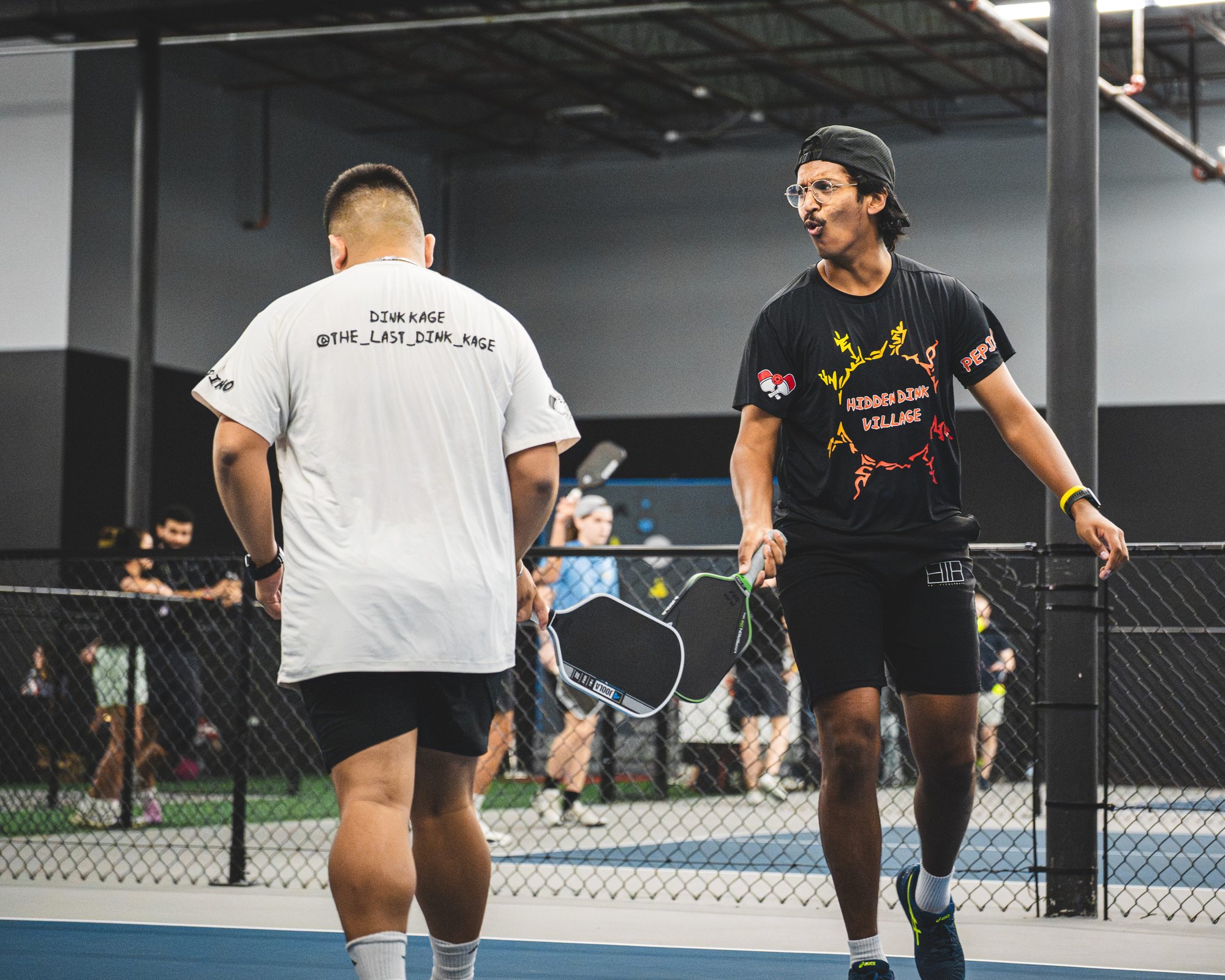
Two small reminders you can take away as you start your journey:
- Focus on quality reps over quantity. Each touch should have a clear intent, each rally should move you toward a specific habit you’re trying to build.
- Treat coaching feedback as a gift rather than a judgment. The best coaches want to see you improve, and your openness to their guidance is the fastest path to your next breakthrough.
Era Pickleball Academy is not a miracle cure for every on-court challenge, but it is a well-tuned vehicle for progress. If you crave structure, honest feedback, and a community that values improvement, this pickleball center offers a compelling environment to grow. The combination of skilled coaching, thoughtful practice design, and a culture that celebrates steady, durable progress has the potential to transform how you approach the game. Whether your aim is to earn a place in the local standings, enjoy longer and more satisfying rallies with friends, or simply develop a more resilient athletic mindset, there is a pathway here for you. It begins with curiosity, commitment, and a willingness to show up ready to learn. The court is waiting, the ball is in motion, and the next decision is yours to make.